
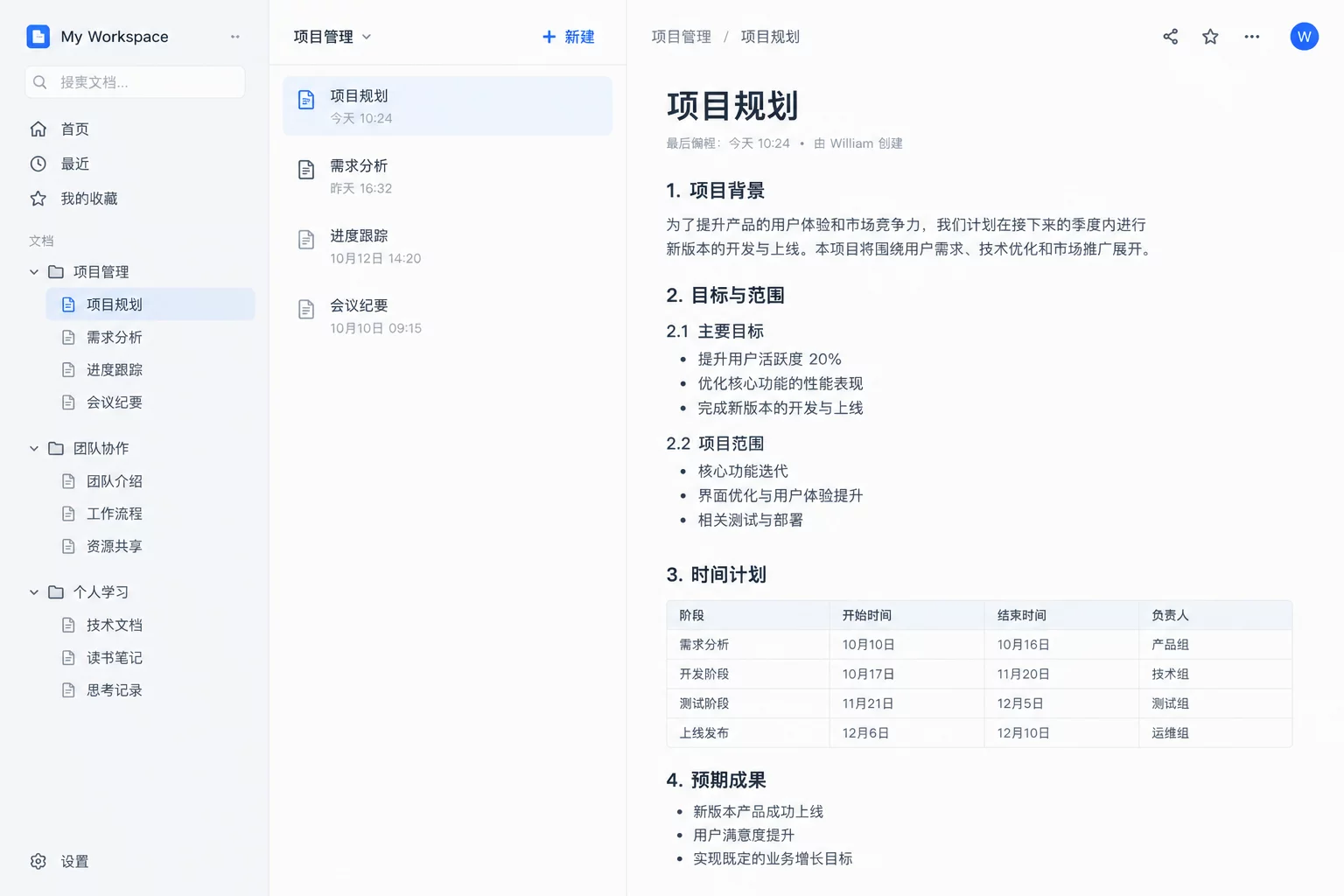
OpenProject's architectural integration of BlockNote represents a fundamental evolution away from static wiki payloads toward modular, structured document trees. Rather than storing project requirements as opaque character streams or unstructured HTML blobs, modern workspaces demand atomic nodes that link directly to ticket workflows, task backlogs, and persistent directory volumes.
Modular Document Trees Replacing Monolithic Markup
Software project management platforms historically isolated documentation from operational artifacts. Specifications were drafted in flat markdown documents, while work packages, issue tickets, and milestone schedules resided in distinct database tables. With BlockNote integrated into OpenProject's core documentation engine, every paragraph, nested checklist, interactive table, and code container functions as an individually addressable tree element.
Behind the interface, the engine structures textual and visual content into an immutable ProseMirror and Yjs-compatible document hierarchy. Document adjustments broadcast through compact operational transformation units, guaranteeing zero editing collisions when distributed teams collaborate concurrently on complex technical specifications.
- Lossless JSON block serialization maintaining deep hierarchical nesting across project subdirectories.
- Real-time concurrent editing powered by conflict-free replicated data types and minimal payload overhead.
- Direct bidirectional linking connecting individual text blocks to file repositories and revision tracking logs.
Embedding modular document graphs directly into core project hierarchies transforms passive technical documentation into an active directory index for our engineering teams.
Synchronizing Workspace Nodes with Persistent Directories
Document hierarchies within enterprise projects must parallel the organizational taxonomy of storage drives and code repositories. BlockNote's drag-and-drop structural blocks permit engineering teams to integrate folder directory previews, asset references, and schema blueprints inline without requiring external embedding services or fragile URL hooks.
For security-conscious environments, self-hosted OpenProject clusters maintain absolute data sovereignty over all document graphs. Document states serialize directly into standard relational databases, removing dependency on closed third-party cloud engines while retaining strict compliance with GDPR confidentiality guidelines.
Technical Architecture & Migration Queries
Earlier OpenProject iterations stored descriptions as raw textile or markdown blobs. BlockNote records every element as an independent JSON node with explicit type identifiers, enabling programmatic parsing, search indexing, and real-time multi-cursor collaboration.
Yes. BlockNote features built-in export pipelines to standard CommonMark, structured JSON, and semantic HTML formats, guaranteeing that documentation backups can be processed by automated scripts without proprietary dependencies.
Because BlockNote executes entirely inside the OpenProject client application and backend instance, no document payload or collaboration stream is routed through third-party servers. All document trees persist on local storage or enterprise database instances.