
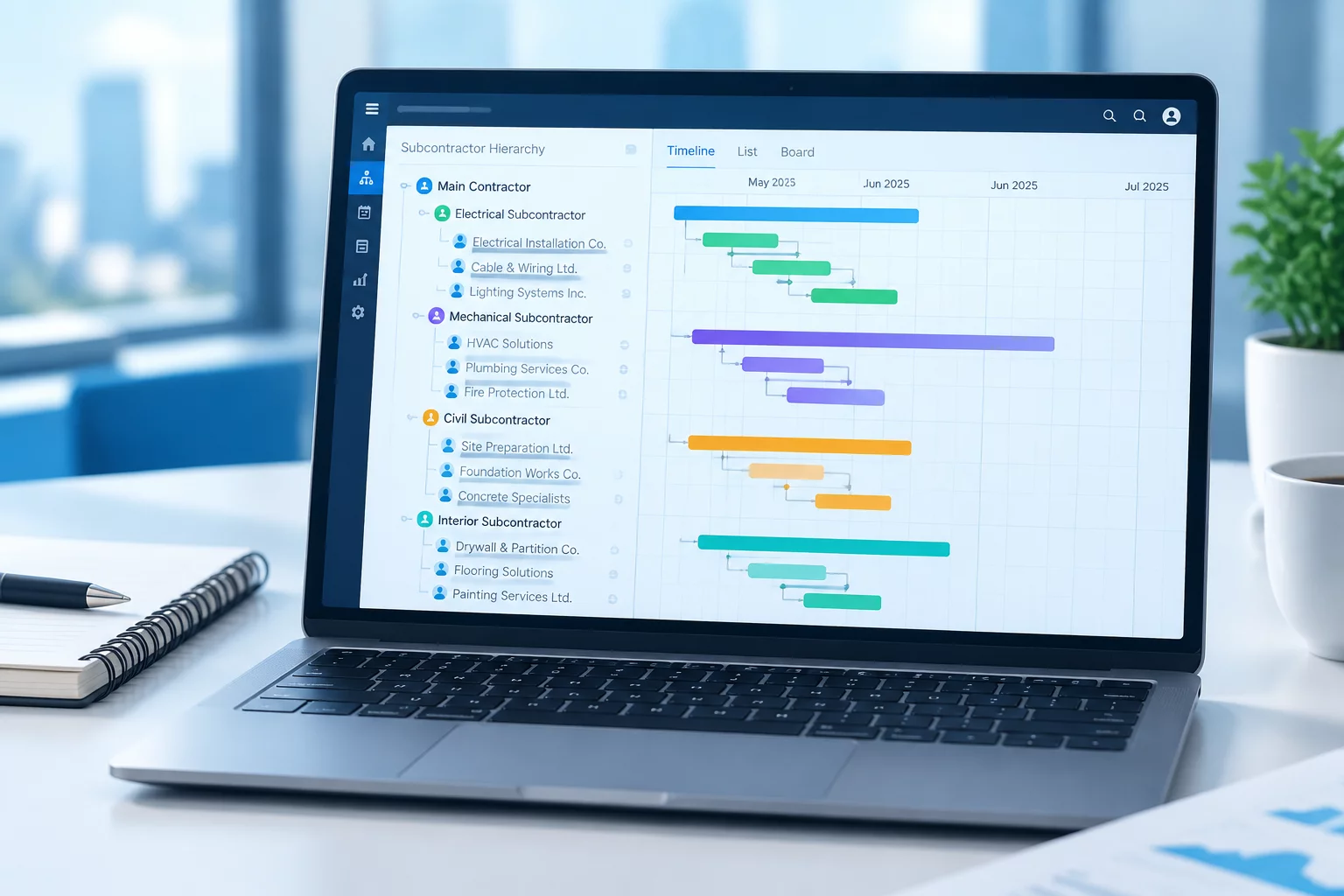
Enterprise project delivery systems frequently stumble when multi-tiered task structures decouple from financial subcontract records. Microsoft Project Operations resolves this fragmentation through integrated hierarchical list views, anchoring supplier commitments, deliverables, line items, and audit documentation directly to parent work breakdown elements.
Deconstructing Subcontract Trees and Directory Mapping
Project managers orchestrating complex engineering or digital transformation initiatives routinely oversee hundreds of interdependent contractor deliverables. When subcontract schedules sit isolated in disjointed spreadsheets or flat databases, reconciling invoice lines against physical milestone completion creates critical blind spots. The native hierarchical list view arranges every subcontract relationship into an expandable multi-level tree, showing purchase orders, line item budgets, and inspection receipts positioned directly underneath parent contract lines.
Beneath the user interface, these tree hierarchies bind directly with Microsoft Dataverse relational entities that govern storage endpoints across connected SharePoint document libraries. Each tree branch produces a structured directory path, discarding arbitrary desktop attachment habits. Files land in dedicated project taxonomy folders that mirror contractual dependencies, establishing persistent traceability between budget expenditure and signed verification files.
- Parent-child subcontract inheritance linking multi-currency contract lines directly to operational milestones.
- Automated SharePoint directory taxonomy generation tied directly to Dataverse work breakdown nodes.
- Dynamic financial rollups aggregating actual labor and supplier costs through recursive parent task containers.
Unifying subcontract lineage with work breakdown structures turns abstract financial commitments into verifiable operational milestones across every tier of execution.
Storage Best Practices and Dataverse Document Federation
Scaling high-volume project directories across global teams requires disciplined file tiering. As engineering deliverables accumulate—including heavy CAD models, environmental certificates, and change order packages—storing raw binary attachments inside transactional relational databases inevitably degrades system latency. Microsoft Project Operations federates binary storage into designated Azure Blob containers and dedicated SharePoint document sets, retaining only lightweight relational metadata, file GUIDs, and audit hashes inside the transactional core.
Systems engineering teams configuring these spaces must institute deterministic metadata schemas during initial deployment. Enforcing uniform directory structures, automated permissions inheritance along project branches, and standardized folder nomenclature ensures sub-vendors deposit compliance filings into their intended node targets, avoiding orphan files and unauthorized cross-vendor visibility.
Technical Architecture FAQ
The view manages up to ten levels of nested task and subcontract dependencies using DOM-level row virtualization. As users expand individual parent nodes, client-side queries fetch child branches on demand via OData batch requests, preventing rendering stalls even across multi-thousand-node project inventories.
Files reside in designated SharePoint document libraries structured with GUID-mapped directory trees that mirror the parent Dataverse record. Metadata attributes and security boundaries synchronize automatically via background webhooks.
Yes. Solution architects establish self-referencing 1:N parent-child relationships within Dataverse table definitions and activate hierarchical settings, allowing custom financial or technical deliverables to compute rollups seamlessly up to root nodes.