
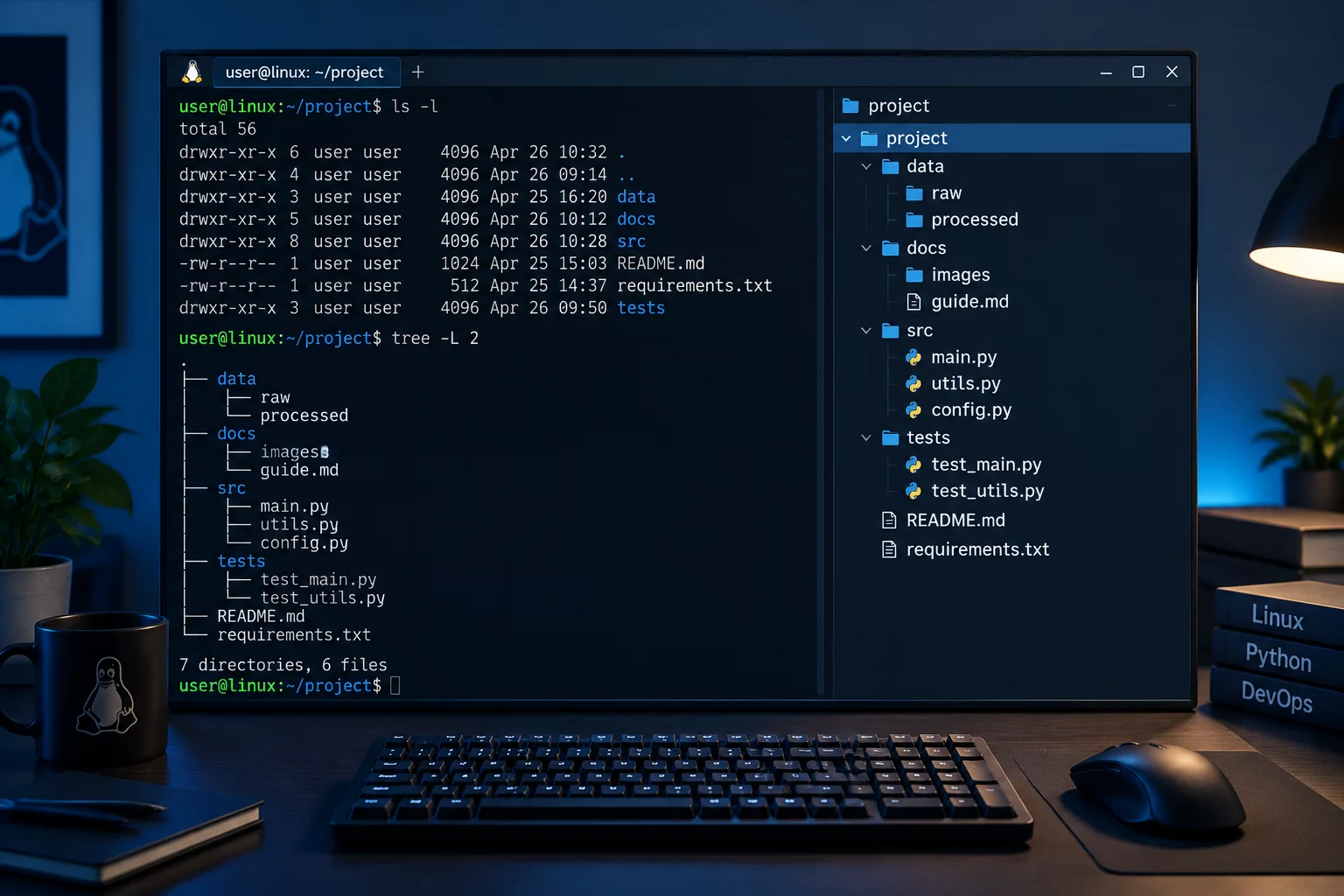
For more than two decades, Linux distributions assigned user documents, pictures, music, and downloads into distinct personal folders through the XDG base directory specification. Software development source trees, however, remained fragmented across arbitrary locations such as ~/src, ~/Workspace, ~/Development, or ~/git. Modern Linux distributions and desktop specifications are introducing XDG_PROJECTS_DIR as a first-class user folder, addressing long-standing isolation and indexing challenges.
Standardizing Workspace Paths Across Modern Toolchains
Development workstations frequently run dozens of auxiliary services, language runtimes, package managers, and container daemons. In the absence of a standardized root, build artifacts and repository checkouts populate disparate home subdirectories, complicating automated backups, disk quota allocations, and desktop search indexers.
The revised xdg-user-dirs configuration introduces XDG_PROJECTS_DIR with a predefined path resolving to $HOME/Projects. This entry exposes several structural advantages across developer systems:
- Automated exclusions from full-text desktop indexers like Tracker Miners to avoid indexing node_modules, target caches, and vendor trees
- Standardized host-to-container volume mappings across Podman, Docker, and Flatpak application sandboxes
- Seamless backup policies enabling snapshot utilities to apply custom deduplication on compiled code trees
Formalizing ~/Projects closes a major gap between end-user desktop abstractions and engineering workflows, giving sandboxed containers and file indexers predictable boundary lines.
Configuration Mechanics and Container Containment
The implementation integrates directly into user-dirs.dirs managed inside $XDG_CONFIG_HOME. System initialization scripts query xdg-user-dir PROJECTS to discover the current workspace target. If undefined, desktop environments default to creating ~/Projects during first login, configuring default POSIX permissions to prevent unauthorized read access by unprivileged local accounts.
Sandboxed applications distributed through Flatpak and Snap benefit significantly from this predictability. Instead of demanding blanket filesystem privileges over the entire user home directory, developer tooling can request fine-grained portal access strictly restricted to XDG_PROJECTS_DIR. This design maintains zero-trust boundaries without breaking IDE workflows or terminal toolchains.
Architectural Specifications & Migration
Yes. Users can edit ~/.config/user-dirs.dirs to point XDG_PROJECTS_DIR to any custom directory path or create a symbolic link from ~/Projects to existing repositories without disrupting standard tools.
Backup daemons recognize the tag CACHEDIR.TAG and standard ignore files placed inside Projects subdirectories, allowing automated suppression of transient compiler caches and heavy virtual environments.
Git workflows remain completely unhindered. Standardizing the parent folder simplifies automated multi-repository scripting, global gitconfig include paths, and IDE project auto-discovery routines.